

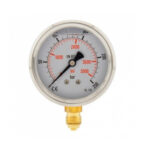
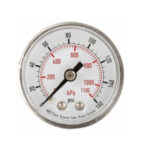
Pressure Gauge
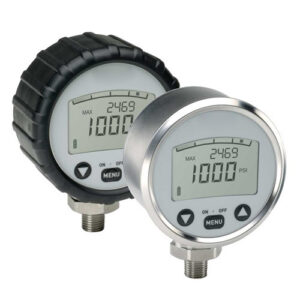
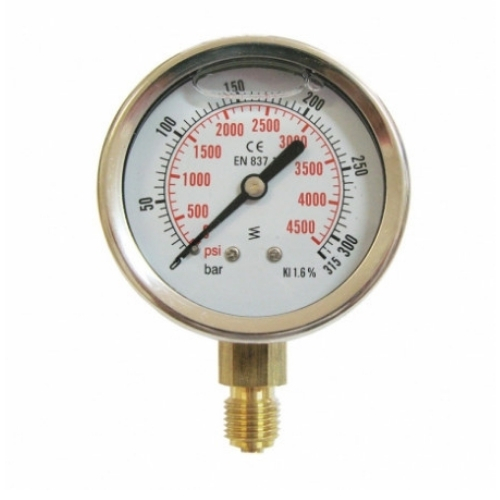
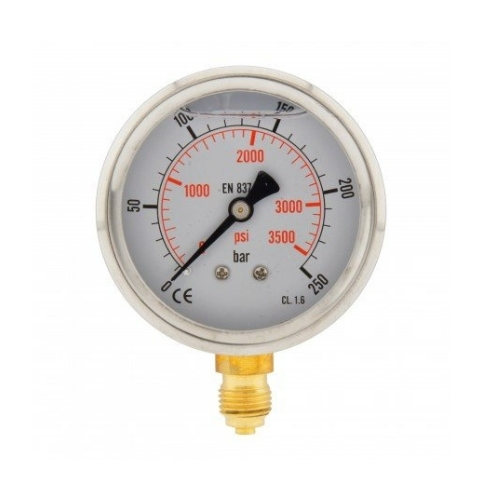
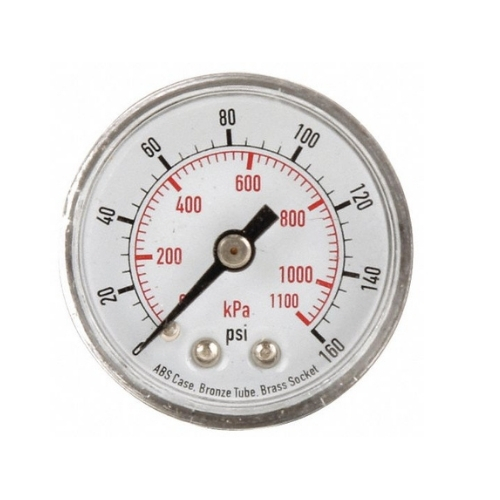
A pressure gauge is a fluid intensity measurement device. Pressure gauges are required for the set-up and tuning of fluid power machines and are indispensable in troubleshooting them. Without pressure gauges, fluid power systems would be both unpredictable and unreliable. Gauges help to ensure there are no leaks or pressure changes that could affect the operating condition of the hydraulic system.
Pressure is measured in three ways—absolute, gauge and vacuum. Absolute pressure is a measure of actual pressure including ambient air, which is zero-referenced with a perfect vacuum, but can be as high as 14.7 psi at sea level. Absolute pressure readings are considered in applications interacting with ambient air, such as the compression ratio calculation for flow (cfm) requirements. Gauge pressure is zero-referenced against ambient pressure and is used in most applications operating in, but not with, ambient air, such as in fluid power systems. Disconnected from equipment, gauge pressure will read zero. Finally vacuum “pressure” is expressed in Torr, or referenced against ambient pressure, as with “in.-Hg” (inches of mercury) units, which measures pressure below ambient.
The hydraulic gauge can withstand different pressure ranges based on what type of gauge style it is and what material it is made out of. Because of this, the gauge style and the material make up two of the most important selection criteria for gauges.
The hydraulic system is designed to work in a set pressure range so the gauge must be rated for that range. Hydraulic pressure gauges are available to measure up to 10,000 psi, although maximum hydraulic pressure is typically in the 3,000 to 5,000 psi range. Hydraulic gauges are often installed at or near the pump’s pressure port for indication of system pressure but can be installed anywhere on the machine where pressure needs to be monitored—especially if sub-circuits operate at a pressure rate different from pump pressure, such as after a reducing valve. Often, pressure-reducing valves have a gauge port to tap into, allowing you to directly monitor its downstream pressure setting.